Back to Blogs
 Quantum Cryptography
Post-Quantum Cryptography Readiness: Why Federal Agencies Need to Fix the Plumbing Before 2030

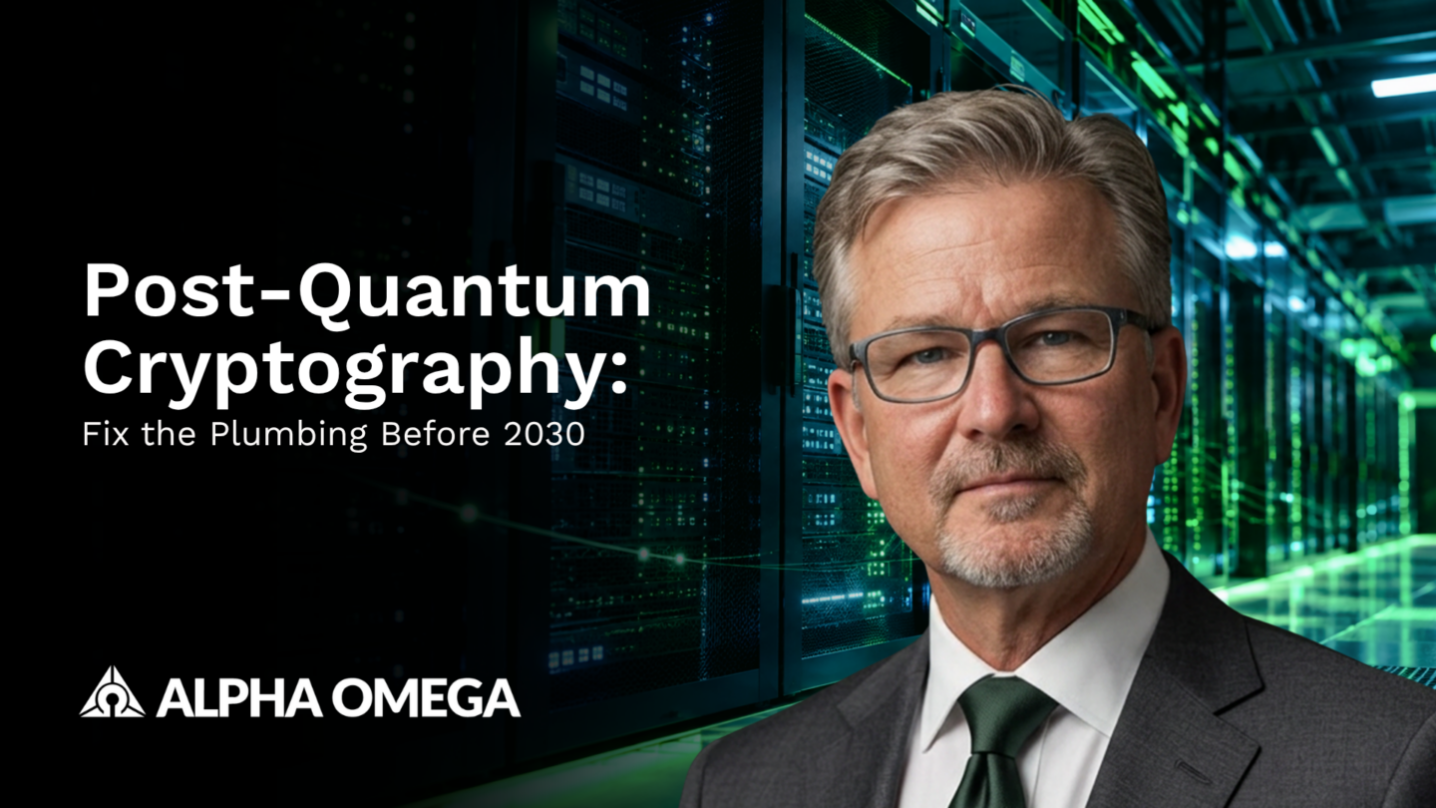
The algorithms are taking shape. The real challenge is preparing the systems, certificates, and processes that keep federal missions running.
When security teams talk about post-quantum cryptography (PQC), the conversation usually dives straight into lattice math, polynomial rings, and quantum threat models.
Meanwhile, the real migration challenge is sitting in plain sight: aging infrastructure, sprawling certificate inventories, undocumented dependencies, and manual processes that can barely keep up with today’s security requirements.
Here is the inconvenient truth most teams overlook: The algorithms aren’t what will break your systems. Your operations will.
What Is Post-Quantum Cryptography, and Why Does It Matter Now?
Post-quantum cryptography (PQC) refers to cryptographic algorithms designed to resist attacks from both conventional computers and future quantum computers capable of breaking many of today’s widely used public-key cryptographic systems.
For federal agencies, the threat goes beyond what quantum computers might do someday. Adversaries can collect encrypted sensitive data today and potentially decrypt it when quantum capabilities advance. Security professionals call this the “harvest now, decrypt later” threat.
The federal government has already established the direction. In August 2024, NIST finalized three foundational PQC standards:
- FIPS 203 (ML-KEM): Establishes shared cryptographic keys for secure communications.
- FIPS 204 (ML-DSA): Provides quantum-resistant digital signatures.
- FIPS 205 (SLH-DSA): Provides an additional quantum-resistant digital signature approach.
Executive Order 14412, Securing the Nation Against Advanced Cryptographic Attacks, accelerated the federal transition and established important milestones for high-value assets and high-impact systems, excluding National Security Systems from those particular milestones:
- December 31, 2030: Transition to PQC for key establishment.
- December 31, 2031: Transition to PQC for digital signatures.
The order also directs the FAR Council to publish a proposed rule addressing covered contractor compliance with applicable NIST PQC standards. That proposed rule is separate from a finalized FAR requirement.
The countdown has started. And agencies have a lot more to prepare than algorithms.
The Math Is Your Vendor’s Problem
You don’t need to write lattice-based key-generation logic from scratch. In most enterprise environments, vendors and technology providers will do much of the cryptographic heavy lifting.
- Hardware Security Modules (HSMs) and cloud key management services (KMS): Providers such as AWS, Microsoft Azure, and Google Cloud are evolving their offerings to support quantum-resistant cryptography.
- Cryptographic libraries and operating systems: Technologies such as OpenSSL and BoringSSL provide essential building blocks for cryptographic implementation.
- Enterprise security vendors: Firewall, load balancer, identity management, VPN, and infrastructure providers must integrate standards-based algorithms into their products.
NIST has established the foundational standards, and vendors are progressing through implementation, interoperability testing, and validation. But adopting a PQC-capable product does not automatically make an agency’s entire environment quantum-ready.
The real question is how those new cryptographic capabilities will work across the systems, applications, identities, and processes agencies already depend on.
That’s where things get interesting.
The Real PQC Challenge: Keys, Certificates, and Process
Moving to quantum-resistant security creates challenges that extend well beyond replacing an encryption algorithm. For federal agencies managing decades of technology investment, those challenges can become mission-impacting.
Certificate Bloat and Packet Drops
Some post-quantum algorithms use substantially larger public keys, signatures, or certificate structures than classical cryptographic methods. That creates potential problems for legacy infrastructure.
Firewalls, load balancers, proxies, and packet inspection tools may struggle with larger cryptographic handshakes, certificate chains, or protocol messages. Depending on configuration, agencies may encounter fragmentation, interoperability problems, increased latency, or failed connections.
Imagine updating an application’s cryptography only to discover that a network appliance between the application and its users cannot reliably process the new handshake. The cryptography works. The mission application doesn’t.
PQC readiness requires end-to-end testing across the infrastructure, not just successful algorithm implementation.
The Manual Renewal Trap
If your team still tracks machine identities and certificate expiration dates in spreadsheets, PQC migration will expose that weakness quickly.
Federal environments already manage enormous numbers of certificates across servers, applications, devices, APIs, cloud workloads, and identity systems. As agencies introduce new algorithms and potentially hybrid configurations, certificate management becomes more complex.
Manual processes create opportunities for expired certificates, inconsistent configurations, undocumented dependencies, and service disruptions. Automated Certificate Lifecycle Management (CLM) becomes increasingly important. Protocols such as Automated Certificate Management Environment (ACME) and Enrollment over Secure Transport (EST) can support certificate enrollment and renewal where applicable.
If your PKI pipeline cannot reliably manage today’s certificates, adding PQC will make the problem harder.
Hybrid Complexity
Agencies cannot replace every cryptographic dependency overnight. During the transition, many environments will need to support classical and post-quantum cryptography simultaneously. Some implementations may combine classical and PQC mechanisms to provide protection during migration.
That introduces another layer of operational complexity. Security teams must manage compatibility, key storage, certificate issuance, rotation, fallback behavior, and protection against downgrade attacks.
They also need the ability to update cryptographic methods as standards, implementations, and threats evolve. This is where cryptographic agility becomes essential: the ability to change cryptographic algorithms and configurations without rebuilding entire systems.
For agencies operating mission-critical platforms, that flexibility can make the difference between a controlled transition and an expensive emergency modernization effort.
3 Practical PQC Moves Federal Teams Can Make Today
The good news? Agencies can start preparing now, even while vendors continue developing their post-quantum capabilities. These three moves build the foundation for a successful transition.
1. Build Your Cryptographic Inventory (CBOM)
You can’t migrate what you can’t see. Start by identifying where cryptography exists across your enterprise: applications, APIs, databases, network devices, cloud services, identity platforms, certificates, cryptographic libraries, and third-party products.
A cryptographic bill of materials (CBOM), supported by a broader cryptographic asset inventory, helps document the algorithms, components, and dependencies an organization relies on. NIST’s PQC migration guidance provides useful context for discovery and transition planning.
But finding cryptography is only the beginning. Agencies should also identify system owners, mission criticality, data sensitivity, vendor dependencies, and where changes could disrupt essential operations.
Action to take now: Start with a high-value system and map its cryptographic dependencies from application to network edge. Identify where legacy algorithms operate and which components you control versus those that depend on vendors.
The goal is to turn an invisible enterprise risk into a prioritized migration plan.
2. Automate Certificate Lifecycle Management
Stop relying on manual processes to manage machine identities and certificates. Agencies need the ability to discover, issue, renew, replace, revoke, and monitor certificates consistently across complex environments.
Automation reduces the risk of unexpected expiration and provides a stronger foundation for introducing new cryptographic configurations. It also gives cybersecurity teams better visibility into certificate ownership, lifecycle status, and policy enforcement.
PQC adoption will require careful testing and phased implementation. Certificate automation helps organizations make those changes with greater control and less operational disruption.
Action to take now: Assess your existing PKI and certificate lifecycle management processes. Identify manually managed certificates, unclear ownership, inconsistent renewal procedures, and systems that cannot support automated certificate enrollment or replacement.
If your team struggles to rotate standard TLS certificates today, resolve those weaknesses before adding post-quantum complexity.
3. Ask Your Vendors Better Questions
A vendor roadmap is only useful if it tells you what your environment needs to do next. Agencies should begin asking their infrastructure, identity, application, and security vendors how they plan to support NIST’s PQC standards.
Go beyond asking whether a product will be “quantum-safe.” Ask:
- Which versions of your products will support FIPS 203, 204, and 205, where applicable?
- What is your roadmap for quantum-resistant key establishment, digital signatures, and hybrid implementations?
- Will the transition require firmware updates, hardware replacement, licensing changes, or application modifications?
- How will new cryptographic methods affect performance, certificate sizes, latency, and interoperability?
- What validation documentation, configuration guidance, and testing support will you provide?
Action to take now: Create a vendor readiness matrix for mission-critical systems. Track each provider’s roadmap, dependencies, required upgrades, and expected testing milestones.
An agency’s PQC migration timeline can only move as quickly as its most critical dependencies allow.
PQC Readiness Is an Enterprise Modernization Challenge
For federal agencies, post-quantum cryptography readiness will depend on understanding the mission environment around the cryptography. That means identifying where keys and certificates live, how systems communicate, which vendors control critical dependencies, and where legacy infrastructure could create operational failures.
It also means connecting cybersecurity planning with application modernization, cloud architecture, data management, and technology governance.
At Alpha Omega, we approach complex federal modernization challenges through this broader operational lens. Our work across cybersecurity and risk management, digital evolution and cloud, data management, and AI-driven automation focuses on helping agencies understand their environments, reduce technical debt, strengthen governance, and modernize mission-critical technology.
Those same disciplines are essential to preparing for PQC. Agencies need visibility into existing systems, disciplined migration planning, automated security processes, and the flexibility to adapt as cryptographic standards and technologies evolve.
The math matters. But the infrastructure and processes surrounding it will determine whether agencies can implement quantum-resistant security without interrupting the mission.
The Countdown Is Already Running
Federal agencies have defined milestones ahead of them. The time to discover hidden dependencies, modernize certificate management, and test vendor readiness is now.
Waiting until every vendor delivers a fully mature PQC solution leaves too many operational questions unanswered. Start with the systems you have. Understand the cryptography they depend on. Build automation and governance into the migration process. And test early enough to find the problems before they reach production.
The algorithms are taking shape. The question is whether your operational plumbing is ready for them.
Explore Alpha Omega’s Cybersecurity & Risk Management capabilities to learn how we help federal agencies strengthen security, manage risk, and prepare mission-critical systems for emerging technology requirements.