Back to Blogs
 AI
AI
Workday, AI, & Data: What’s Next in ERP and HCM Modernization?

Workday, AI, & Data: What Federal Agencies Must Do Next to Modernize ERP and HCM
Federal Workday modernization is entering a new phase where AI, trusted data, and governed workflows determine whether modernization programs deliver real mission value.
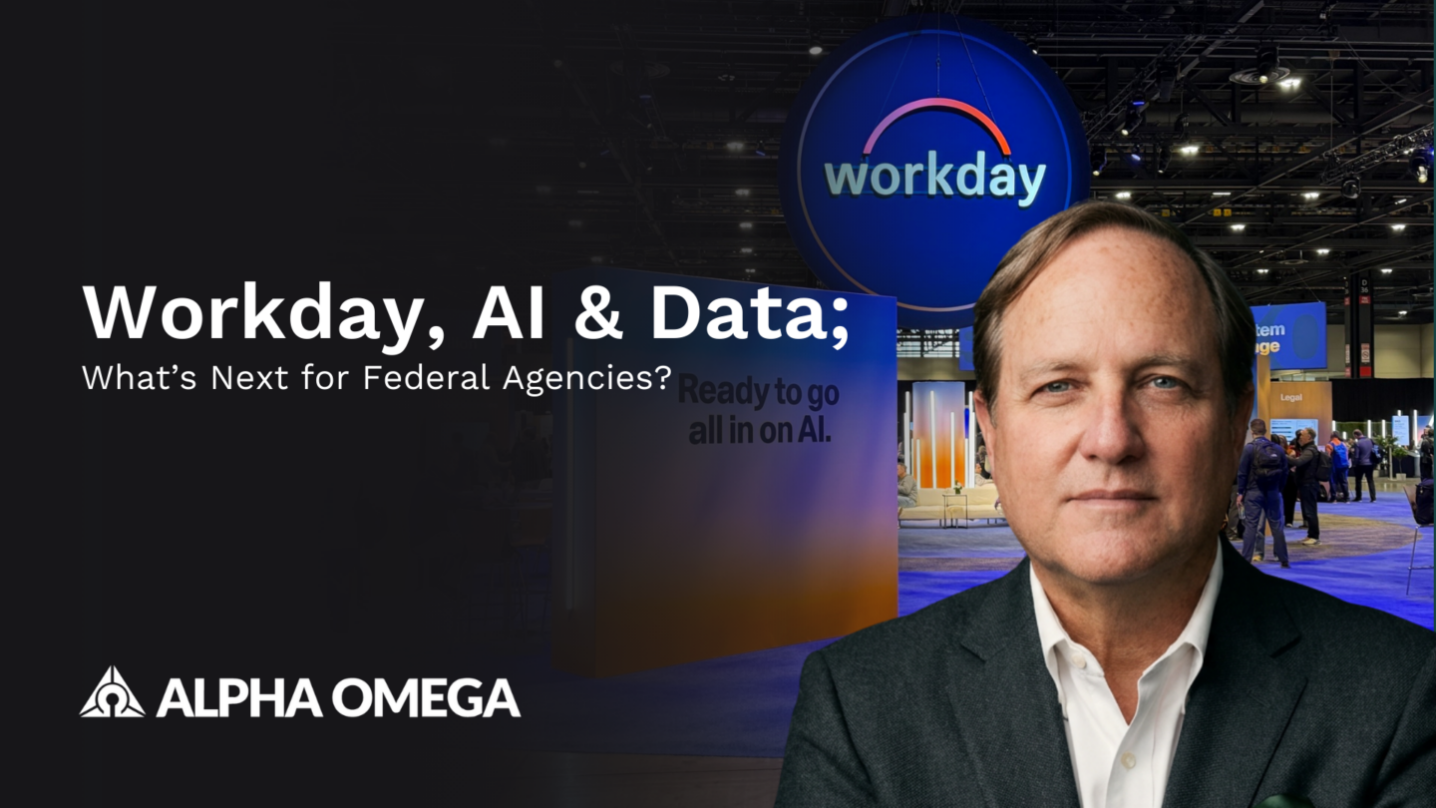
I came back from Workday SKO (Sales Kick-Off) in Chicago with one clear conclusion: the market has moved beyond AI as a feature discussion and toward AI as an operating model decision. The strongest message at SKO was that AI becomes useful at enterprise scale only when it sits on trusted data, operates within governed workflows, and operates across an ecosystem built to turn insight into action.
For federal agencies, the time for change is now. Modernization demands a secure, auditable, integration-ready foundation to support automation, analytics, and eventually agent-powered work across the enterprise.
In federal environments, AI is only as strong as the system, data, and controls it runs on.
Key Takeaway
Federal Workday modernization is shifting from system replacement to AI-enabled enterprise execution. Agencies that combine trusted systems of record, governed workflows, and secure automation will unlock the real value of AI across HR, finance, and mission support operations.
What Workday SKO Revealed About the Future of AI
Three themes came through consistently in Chicago.
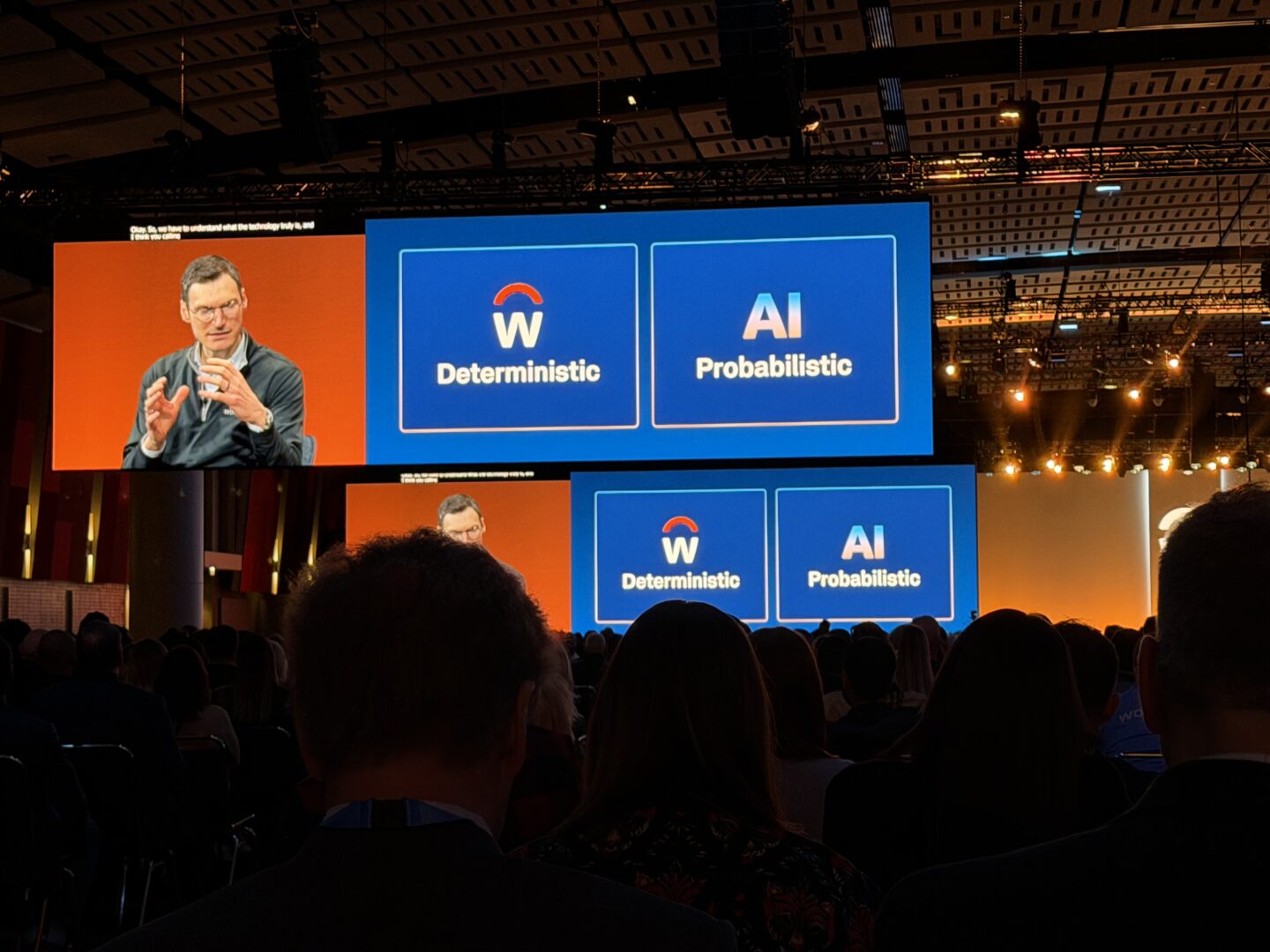
First, Workday drew a clear distinction between deterministic systems of record and probabilistic AI. AI has power, but it does not replace the operational discipline of an authoritative ERP and HCM foundation. In federal environments, that distinction matters even more because the cost of ambiguity is not just inefficiency—it is controlling weakness and audit exposure.
Second, Sana, Workday’s new AI experience platform, was positioned as much more than a conversational layer. The direction is toward a new front door for work where search, assistants, agents, and automation are tied directly to enterprise context across Workday and other applications.
This signals a shift toward an experience model where users do not simply retrieve answers—they move work forward inside governed workflows.
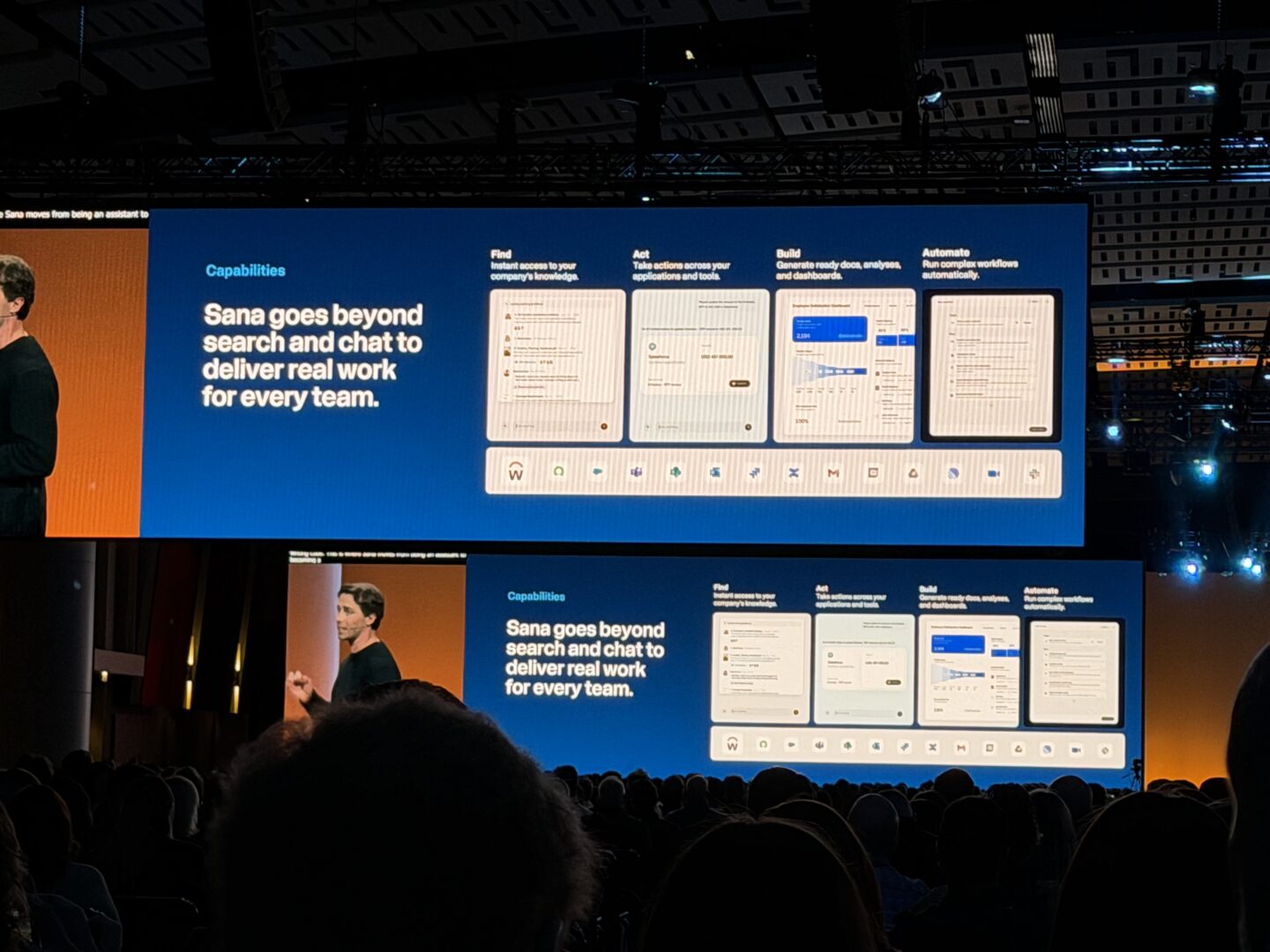
Third, the conversation has shifted from answers to execution. The focus is no longer only on what AI can say. It is what AI can safely do, with governance, policy enforcement, and measurable outcomes. That also explains the strong emphasis on partner alignment at SKO. Workday knows enterprise value will not scale through product messaging alone. It will scale through ecosystem execution.
The Shift from AI Answers to AI Execution
One of the clearest themes at Workday SKO was the transition from answers to execution.
For years, enterprise AI discussions focused on generating insights or summarizing information. The new focus is on enabling AI to take action within enterprise systems, safely and predictably. That shift is significant in federal environments where every transaction must operate within strict security, compliance, and audit frameworks.
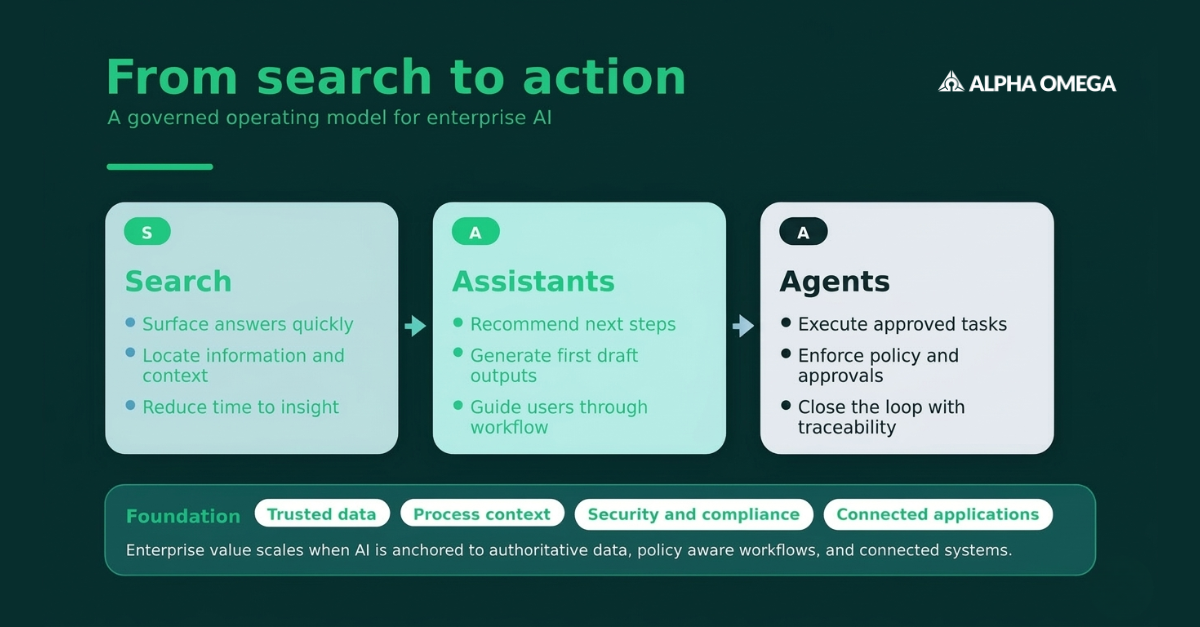
The progression the industry is moving toward is clear: search evolves into assistants, assistants mature into agents, and agents ultimately execute work inside enterprise platforms. In this model, AI can trigger workflows, automate approvals, and orchestrate processes across systems.
For federal agencies, that level of capability only becomes viable when AI operates on trusted enterprise data and within governed workflows. Without that foundation, automation introduces more risk than value.
Why Workday Modernization Matters for Federal Agencies
Federal agencies are operating under several simultaneous constraints. They must:
– modernize while most IT budgets still support operations and maintenance of legacy environments.
– meet growing expectations around zero trust, cybersecurity, auditability, and compliance.
– integrate cloud platforms into complex legacy landscapes while driving change management in workforces that cannot absorb disruption without mission consequence.
That is why federal ERP modernization matters now.
Cloud ERP and HCM platforms are the data and workflow backbone for higher-order capabilities, including automation, analytics, and AI-enabled decision support.
A modern Workday foundation can standardize business processes, reduce manual reconciliation, improve data quality, and create a stronger control environment across HR and finance. These improvements establish the trusted data foundation required for AI to produce meaningful outcomes.
The broader AI conversation has also matured. Workday has cited research showing that 82% of organizations are expanding the use of AI agents. Federal agencies will not be insulated from that shift. The real question is whether those capabilities will be introduced through governed enterprise platforms or through disconnected tools that create more operational risk than value. In federal settings, AI in ERP environments must operate within trusted data, role-based security, policy-aware workflows, and auditable outcomes.
Responsible AI, enterprise trust, and governance are foundational requirements for scaled adoption.
How Alpha Omega Bridges Strategy to Execution
Federal Workday programs do not succeed simply because a tenant is configured correctly. They succeed when agencies can move from strategy to execution across architecture, integration, security, testing, adoption, and operational support.
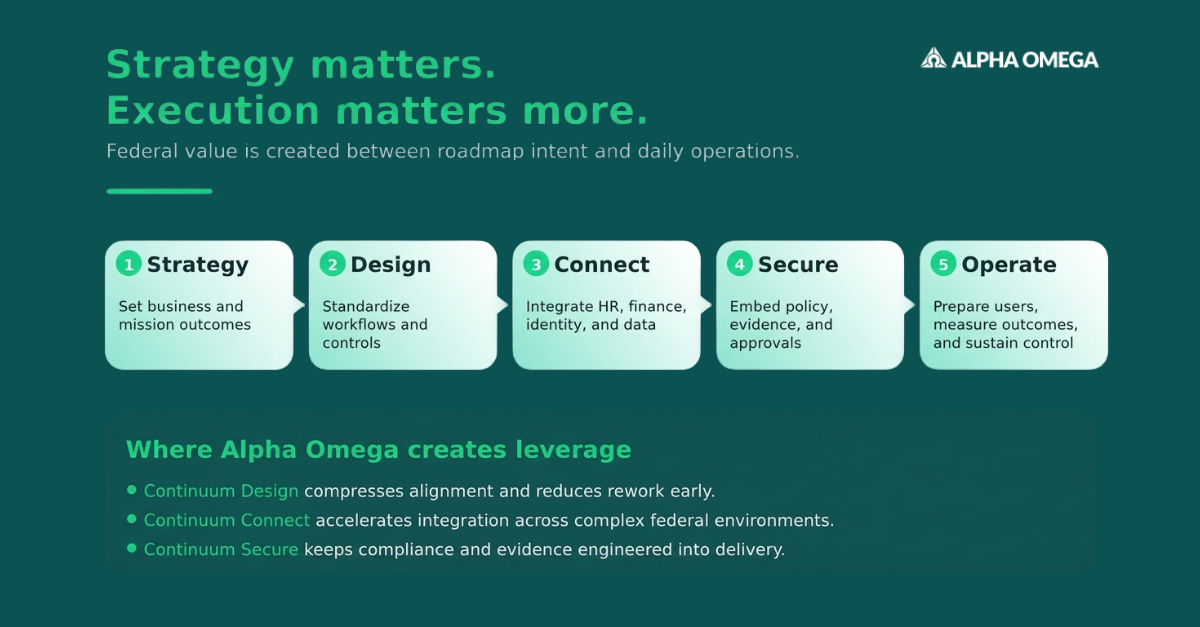
This is where Alpha Omega differentiates beyond implementation.
Enter Alpha Omega’s Continuum Automation Framework.
Continuum Design helps agencies align modernization intent early through rapid prototyping and clearer requirements translation. On complex federal programs, this reduces rework, shortens decision cycles, and improves business ownership.
Continuum Connect addresses one of the hardest parts of federal delivery: integration across HR, finance, identity, shared services, reporting, and legacy mission systems. Workday can only function as a true system of engagement when the surrounding ecosystem is connected with discipline.
Continuum Secure reinforces the security-first posture federal agencies require. Compliance, evidence, and control validation cannot be bolted onto a Workday program at the end—they must be engineered into delivery from the start.
This is also why the SKO messaging around Workday Extend and Sana Agent Builder stood out. Workday is clearly building toward a platform where governed extensions, automation, and AI agents operate close to the enterprise data model and security framework. That direction aligns closely with Alpha Omega’s federal delivery model.
The opportunity is to operationalize Workday to reduce friction, strengthen control, and accelerate measurable outcomes.
What Agencies Should Do Next
Agencies that want to extract real value from Workday modernization should focus on four actions.
1. Treat modernization as data and process transformation, not application replacement.
Standardize business processes, reduce exception handling, and improve data stewardship before scaling AI.
2. Rationalize integration architecture early. Agencies should identify where Workday must exchange data and trigger actions across finance, HR, identity, learning, case management, and mission support systems.
3. Build governance for AI and automation now. Ownership, access controls, policy enforcement, monitoring, and escalation paths must be defined before AI agents or advanced automation move into production workflows.
4. Invest in adoption as seriously as technology. Federal change management is never secondary. If users do not trust the system, understand the workflows, or see the control structure, adoption will stall regardless of platform capability.
Closing Perspective
Workday SKO was valuable not because it previewed another set of product features, but because it clarified where the enterprise technology market is heading.
The conversation has moved from AI curiosity to enterprise execution. For federal agencies, that raises the bar. Success will go to organizations that pair trusted systems of record with governed AI, strong integration architecture, and disciplined execution.
That is the lane Alpha Omega is built to support – Workday provides the platform. Federal agencies provide the mission. The task now is to bridge strategy to execution in a way that is secure, auditable, and outcome-driven.
Federal agencies that approach Workday modernization as a platform for trusted data, governed AI, and enterprise execution will be best positioned to deliver mission outcomes in the next generation of government operations.